Agricultural plant-based side streams hold enormous potential for utilization
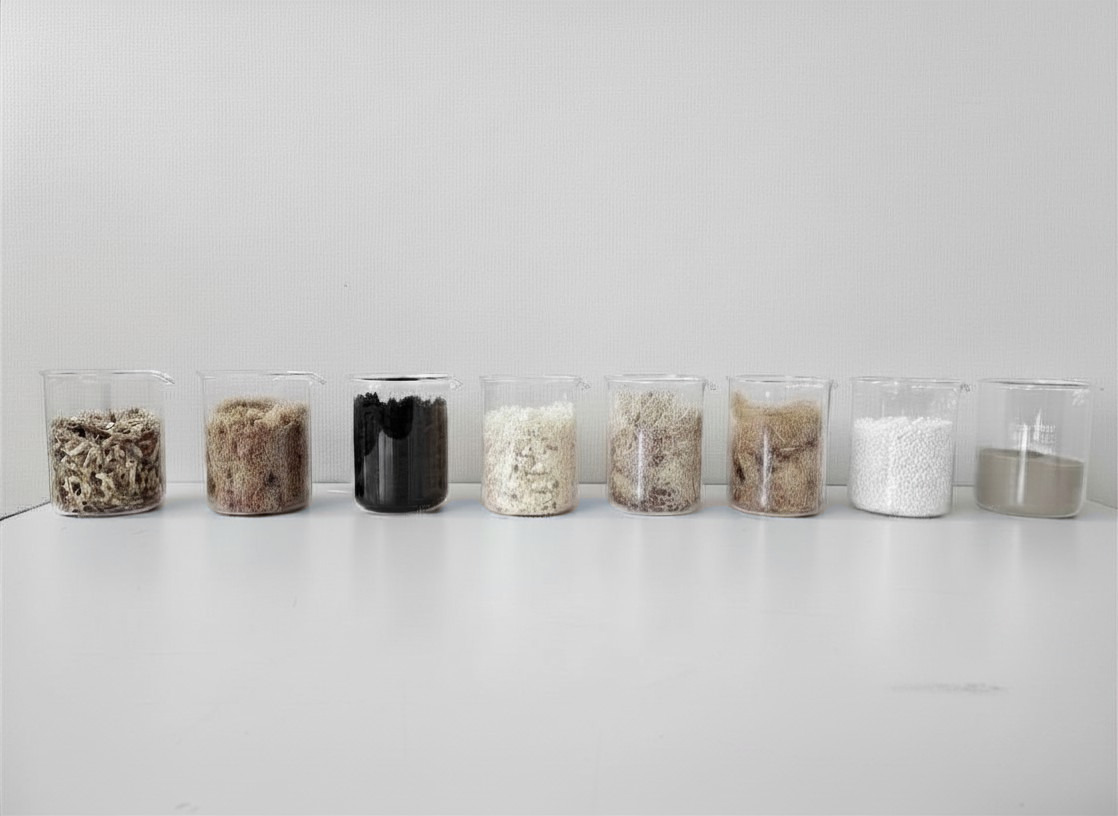
Straw, hay, hemp, flax and other agro-fibres have attracted growing interest from industry. Plant fibres originating from agriculture have the potential to become a significant raw material base as industries seek alternatives to fossil-based materials. At present, a large share of Europe’s valuable agricultural side streams is burned, composted or simply wasted.
Fiberwood’s Senior Production and Material Technology Development Manager, Jani Lehmonen, is among the pioneers who study and test the suitability of agro-fibres for industrial applications in their work.
Why are agro-fibres attracting interest right now?
At Fiberwood, we are constantly looking for new raw materials so that we can develop sustainable solutions for the construction and packaging industries. Behind this is a broader transition in which the aim is to reduce the use of fossil-based materials and move towards low-carbon alternatives. This requires new material sources, and agricultural fibre side streams are seen as having a great deal of untapped potential. Agro-fibres complement the current raw material base and respond to the needs of the circular economy and our customers.
How are new fibres studied?
We assess the suitability of new fibres in the laboratory from two perspectives. The first is whether the fibres can be processed in existing production processes. This is important so that new materials can be introduced without major changes to production.
The second perspective relates to the material’s properties. The research examines, for example, strength, thermal insulation performance and how the material reacts to moisture. Based on these factors, we assess whether the fibre is suitable for the products under development.
How do agro-fibres perform as a material?
Based on the first trials, agro-fibres show strong potential. The structure and length of the fibres influence how durable the materials made from them can be. In addition, their lightweight and porous structure supports thermal insulation performance and affects how the material behaves in relation to moisture.
Agro-fibres also bind carbon as they grow. This means that using them in products helps store carbon and supports low-carbon solutions.
There are, of course, also challenges, the most important of which is consistency. Because these are natural materials, their properties can vary. Availability also fluctuates, which has an impact especially in situations where production is to be scaled up.
Is the wider use of agro-fibres being promoted?
Yes, and one example is the international PRIMARY project coordinated by VTT, in which Fiberwood is involved. The goal is to develop new business opportunities for farmers and cooperatives by utilizing agricultural raw materials that are currently underused. The project develops and tests solutions for producing ingredients from these raw materials for applications such as food, feed, materials, energy use and fertilizers.
The raw materials being studied include grass, greenhouse side streams, cotton by-products and olive tree pruning residues. Large volumes of these are generated annually:
- grass plants: 370 million tonnes
- greenhouse side streams: 4.5 million tonnes
- cotton by-products: 1.4 million tonnes
- olive tree by-products: 5.95 million tonnes
What does the future look like?
Thanks to their large volumes, agro-fibres have the potential to play an important role in the bio-based solutions of the future. The first applications will become more clearly defined at the European level through the PRIMARY project.
One key finding from the research has been that agro-fibres are highly suitable for both product development and industrial use. This strengthens their position in future material solutions.
Co-funded by the European Union. Views and opinions expressed are, however, those of the author(s) only and do not necessarily reflect those of the European Union or CINEA. Neither the European Union nor the granting authority can be held responsible for them.