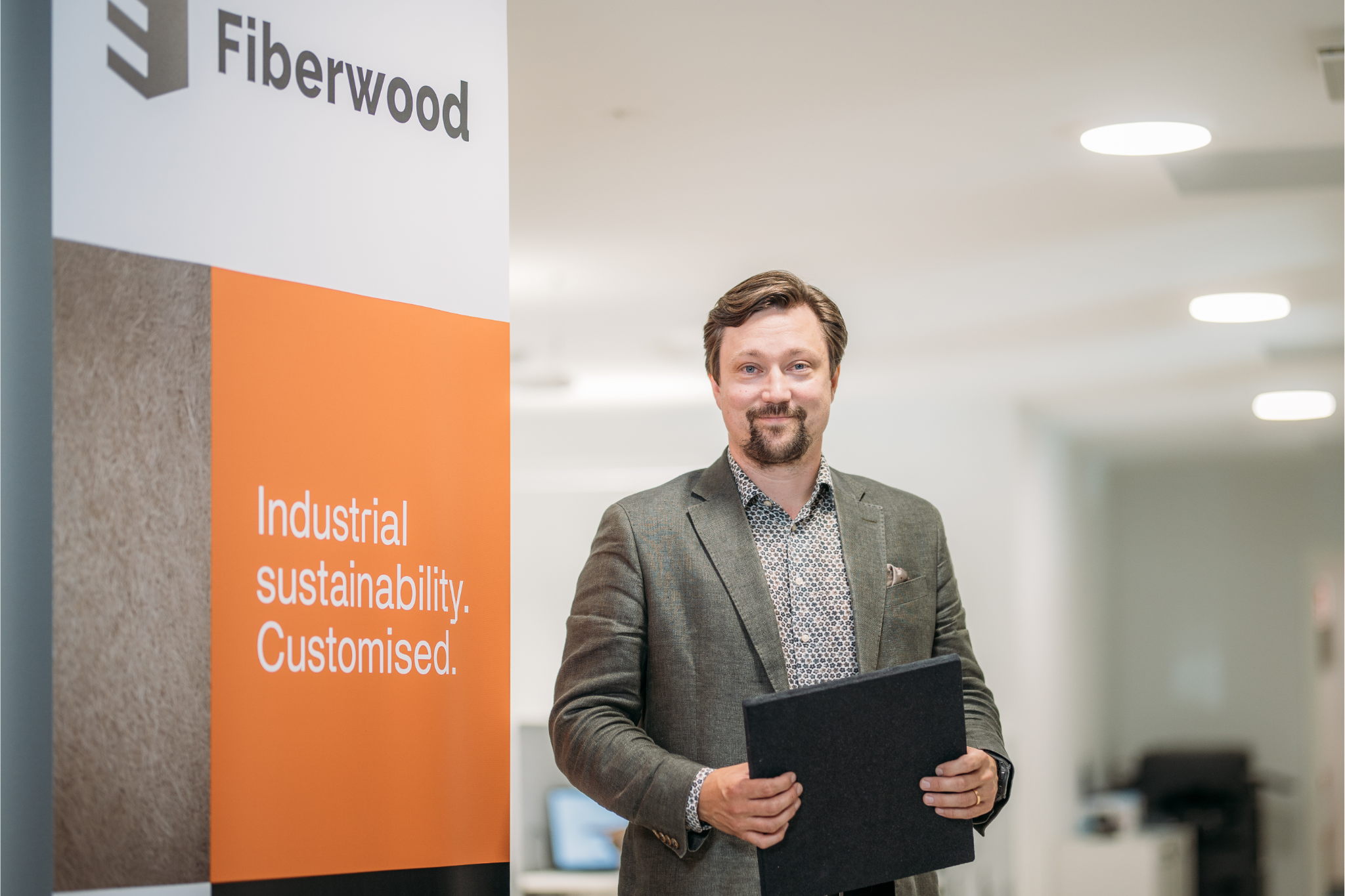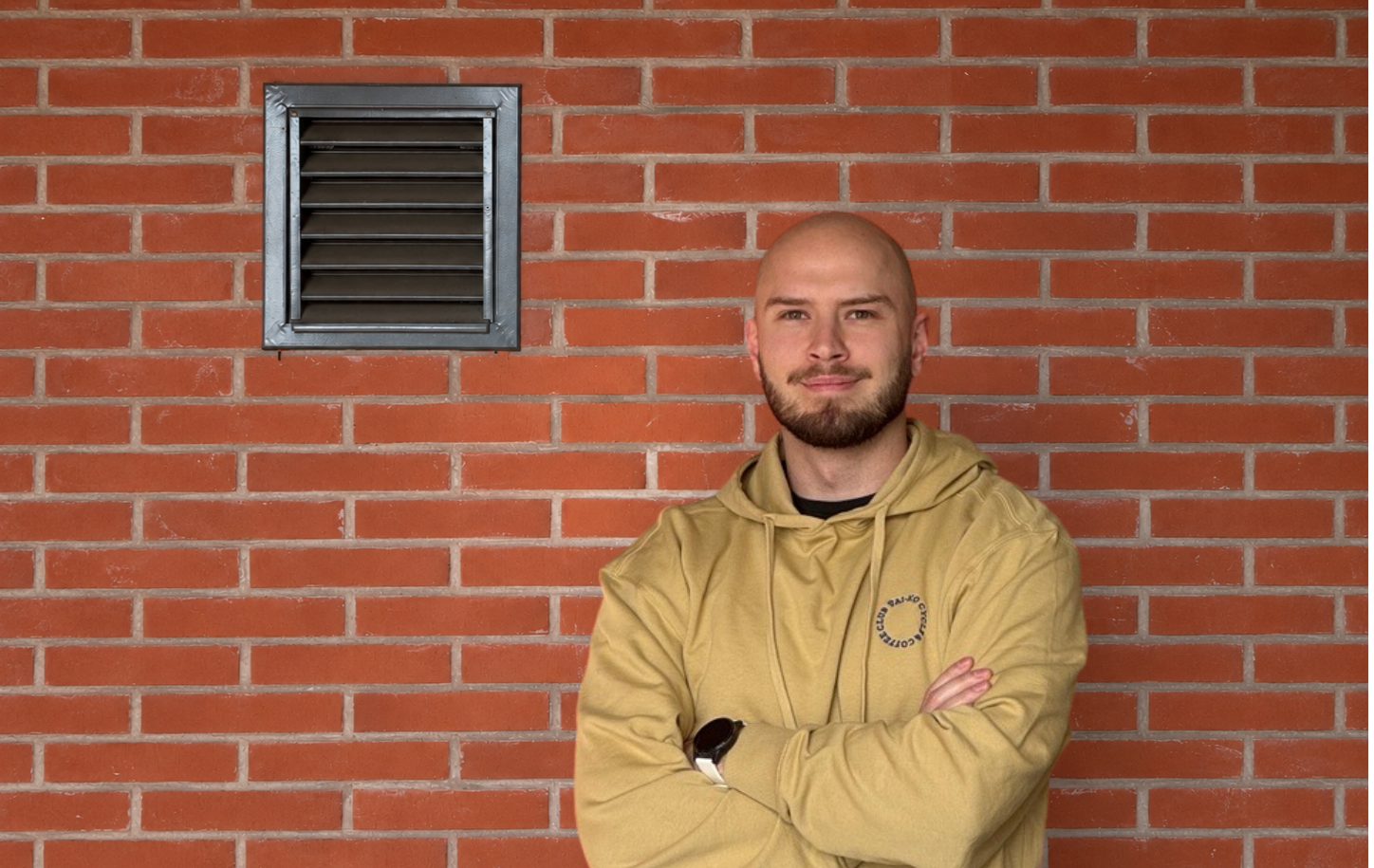
Fiberwood’s Fossil Free series introduces Research and Development Specialist Otso Kakko, whose work brings together chemistry, bio-based materials and practical problem-solving. Kakko joined Fiberwood as a master’s thesis worker and now works as the company’s chemist, looking for solutions that cannot always be found in textbooks.
Otso Kakko found his way to Fiberwood through his interest in the bioeconomy and wood-based materials. Before studying chemistry at the University of Jyväskylä, he graduated as a biomedical laboratory scientist from Tampere University of Applied Sciences and worked in fields including virology and molecular biology. At university, he chose to focus on bio- and wood-based chemistry as well as organic chemistry.
Fiberwood had a need for chemistry expertise, and Kakko was given the opportunity to complete his master’s thesis with the company while also contributing to other research and development projects.
His thesis focused on concentrations of Fiberwood’s wastewater, but from the beginning, his role extended well beyond his academic work.
– The idea was that I would complete my thesis while also working on other Fiberwood projects that required chemistry expertise, Otso Kakko says.
After graduating, Kakko stayed at Fiberwood as a Research and Development Specialist. At the same time, the scope of his responsibilities expanded considerably.
A chemist where there are no ready-made answers
Kakko works at the early stages of Fiberwood’s research and development process. When the company wants to test new materials, chemicals or other solutions, the first trials often end up on his desk.
Simply knowing whether something works is not enough. The more important question is why.
– If something works or does not work, I try to find out why. For example, is there a chemical phenomenon behind it that we can influence? Kakko explains.
As Fiberwood’s only dedicated chemist at the moment, Kakko has a broad range of responsibilities. Chemistry-related questions in product development, the production process and even permit applications often come his way.
Research is like putting together a puzzle
Material development is another key part of Kakko’s work. At university, laboratory work often follows a predefined method. In working life, and especially when developing new technology, things can be very different.
– In research and development, you have to keep looking for new ideas and sometimes think outside the box, Kakko says.
New ideas often emerge by combining existing knowledge in new ways. Kakko follows solutions used, for example, in the paper industry and related fields and considers whether they could also be useful in Fiberwood’s process.
– It is a bit like putting together a puzzle. You read about what has been done elsewhere, take pieces from different places and try to build a solution that could actually work for us, Kakko explains.
– And if something does not work, you do not simply set it aside and move on to the next thing. You think about why it failed and whether there is something worth investigating further, Kakko says.
Finding better alternatives to fossil-based materials
Kakko’s interest in the environment, biology and chemistry has been with him for a long time. At Fiberwood, these interests come together in practical product development.
– When I studied bio- and wood-based chemistry, I gained a much better understanding of how much potential it really has, Kakko says.
Fiberwood’s goal of replacing fossil-based materials with wood-based solutions aligns closely with Kakko’s own interests and values. From a chemist’s perspective, particularly interesting areas include the development of fossil-free, bio-based and biodegradable binders.
The opportunity to work on issues that matter from an environmental perspective is an important source of motivation for him.
– If I can contribute during my career to using natural resources as efficiently as possible and reducing emissions, it feels like I am doing something that genuinely matters, Kakko says.
The freedom to learn, experiment and find solutions
Research and development rarely comes with ready-made answers. It requires curiosity, the courage to experiment and the ability to learn from what does not work.
As a young specialist, Kakko has been able to jump straight into the deep end at Fiberwood. His responsibilities have grown quickly, while the people around him provide an environment where ideas can be exchanged openly and help is easy to ask for.
For Kakko, the workingenvironment is an important part of what makes the job meaningful.
– It feels good to come to work in the morning. Great colleagues, good leadership and a supportive atmosphere make a huge difference to how much you enjoy your work, Kakko says.
Since graduating, Kakko feels he has found a role where he can both apply his expertise and continue learning. Looking ahead, he is particularly interested in solutions related to the efficient use of natural resources that improve resource efficiency, reduce emissions and advance the use of bio-based materials.